Beach Hill
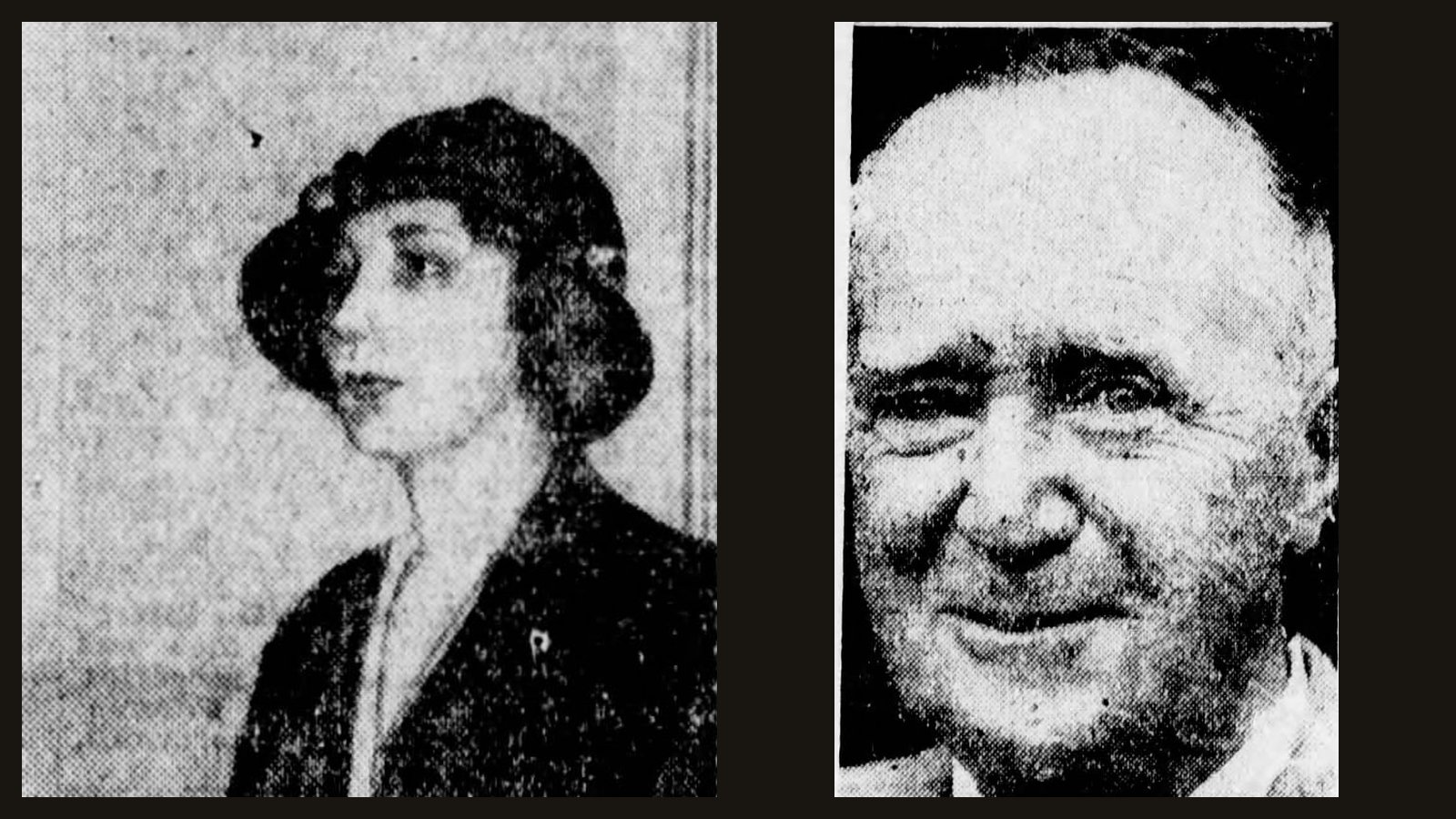
Saturday, September 9, 1933, was Admission Day, California's own holiday. In Santa Cruz the money lived up on Beach Hill, above the bay, and one of the big houses there belonged to Francis Joseph Morgan Grace Sr.
He had been an executive of the Grace shipping and trading house, and he was a nephew of W. R. Grace himself. He had retired years before and moved down the coast with his wife, Theodosia, who had been in a wheel chair for years. He was not well either. His own doctor had treated him for a heart ailment for ten years. The papers gave his age as fifty-seven, and later fifty-eight; the birth date on his passport made him fifty-nine.
The house was called "The Cabins." It ran on staff: a butler, Richard Frank, a houseboy, a companion for Mrs. Grace, and nurses. Nurses came and went. One of them had been let go about eighteen months earlier, and a younger nurse, Helene Roberts, had been hired.
That afternoon Mrs. Grace had gone downtown to shop. Grace sat in a lawn chair in the garden with Miss Roberts. The butler was in the kitchen.
"I had a reason"
At about five o'clock a woman appeared at the edge of the garden. Miss Roberts knew her. It was the nurse who had been let go.
Grace got up and walked across the lawn to her. They talked for two or three minutes. "I could not tell what was being said," Miss Roberts later testified, but when he came back "I could see that he was disturbed." She asked the woman to leave. The woman refused, pacing and saying, "that's all right." Then Grace and his nurse started for the house, and just as they reached the edge of the lawn there was a shot.
Grace cried out and lunged toward the house. Miss Roberts called for the butler, who ran out and took the pistol from the woman's hands. The Sentinel later fixed the time at 5.22 p.m.
She said much the same to the butler. She asked him whether Mr. Grace was dead or only wounded, and when he said he feared he was dead she asked for the gun back. When he refused, she said, "Oh, what is the use!" She asked him for a cigarette and told him she had never smoked before. He gave her one.
According to what Miss Roberts told the police, she went one step further: "I had my own reasons. He didn't do what he promised to do."
Before she was taken away she had swallowed a bottle of sedative tablets, washed down at the garden faucet. At the county jail that night she was "in a stupor." She roused long enough to give her name and to tell Sheriff A. T. Dresser, "I am sane."
The nurse
Her name was Frieda Wilhelmina Augusta Weltz, and she was forty-three. She had been born in Fayette County, Pennsylvania, to German-born parents, trained at the Kensington Hospital for Women in Philadelphia, and served as an army nurse in the World War. She came to California in 1927 and nursed privately in San Francisco. Her registry called her reputation "most excellent." Her landlady of six years said she had nursed her through pneumonia, and that "She must have gone insane in a single moment."
On Monday, September 11, a coroner's jury heard four witnesses and returned an open verdict: death from a gunshot wound. The jurors said it had been made perfectly clear that she was in the garden with a revolver in her hand, "but for some reason or other no one testified as to who fired the shot."
District Attorney J. Frank Murphy had no doubts. He charged her with murder, told the press she had admitted trailing Grace, and said she had tried once before, in January 1933, at his hotel apartment in San Francisco, where she was disarmed and put out. In the first days after the killing, still coming out of the sedative, she told him before a shorthand reporter that she had seen Grace alone in the garden two weeks earlier:
She hired Stanford G. Smith, a former district attorney, and her family sent John Duggan of Pittsburgh, an old family friend, who flew across the country. Smith told reporters he had found the reason, and that it would justify her. On September 29 she pleaded not guilty and not guilty by reason of insanity. Under California law that meant two trials, and the second, on her sanity, would only happen if the first jury convicted her.
In October, Grace's will was filed: an estate of $150,000, with bequests to his son, a Japanese houseboy, and a nurse formerly employed by Grace, Miss Catherine Nelson. The wire story added that Weltz had said at her arrest that Grace and Miss Nelson would know her motive.
A room across the street
The trial opened on Monday, November 13, before Judge J. L. Atteridge, in the biggest crowd the courthouse had ever held. The jury was chosen in a single day: eleven men and one woman, Mrs. Ruby G. Enemark, a housewife from Freedom. On the first day the judge allowed the defence, over Murphy's objection, to call the shooting "the accident."
Murphy promised to prove the killing "intentional and deliberate," planned over more than a year. Two hotel keepers brought their registers. Between June 1932 and September 1933, he said, she had stayed about seven times in rooms directly across Second Street from the Grace garden, under the name "Mrs. L. Johnson." "She always asked for room No. 1," the manager of the March Rooms testified. "Room No. 1 overlooked the Grace gardens."
In that room the police had found a number of lead fishing sinkers. Nobody in court said what they were for.
On November 15 the widow was wheeled into court. Asked whether her husband was dead when she came home, she said, "Yes — he was dead," and her composure broke for the only time. The defence asked whether Weltz had really been hired to treat Grace for alcoholism. "No," Mrs. Grace replied. "He was suffering from heart trouble."
That afternoon the clerk read Weltz's own statements, given to Murphy and the sheriff in the first days. In them she said she had told Grace, "I came to give you what I promised you," and that he had said, "Can't you postpone it?" She spoke of "his lies and insults," and when asked whether an apology would have stopped her, said it would have made no difference. The defence let it all in on purpose: the jail matron, Mrs. J. D. Kenney, testified that the prisoner had been "dazed and stupefied" on the days the statements were taken. The judge admitted them only as evidence, not as confessions. Neither, it developed, had been signed.
Her account
On Thursday, November 16, Frieda Weltz took the stand, "ashen pale, but with surprising composure," and told the jury for the first time what she said had happened.
She testified that in June 1932 Grace came to her apartment in San Francisco, having been drinking, and drove her to the house in Santa Cruz. On the second night, June 9, he gave her wine at dinner. She became dizzy and ill, lay down, and knew nothing until morning. When she woke she accused him of drugging and assaulting her. "He admitted it and laughed about it," she testified. "He said I was a nurse and ought to be able to take care of myself."
She said she told no one, being "afraid to call a doctor … because of my profession and my reputation." Some weeks later, she testified, she found she was pregnant. She said Grace told her it would ruin him if she had a baby, and that in August she took a drug to end the pregnancy, which "ruined my health."
That, she said, was why she kept coming back to Santa Cruz under another name: to catch him alone and sober, and ask for help. On September 9 she had the gun in her handbag because "this was to be my last attempt to get help. If he refused me this time I was going to kill myself." She told him, "I don't want your money. I want you to carry out your promises or I will commit suicide."
Thirteen character witnesses followed, most of them nurses from San Francisco. When one of them, Mary E. Kennedy of Letterman hospital, stepped down and kissed her, the courtroom broke into applause, and the judge threatened to clear the room. The Sentinel called it "the most startling demonstration ever beheld in a local court of law."
Then the defence called the butler's wife. Mrs. Richard Frank, also a nurse, had looked after Grace in San Francisco that January. She testified that he had told her he was in a great deal of trouble:
He would not say who it was. Then, she said, "he turned his face to the wall."
The cross-examination
Murphy cross-examined her for nearly three hours on Friday. His first question, asking whether she had tried to blackmail Grace, was ruled highly improper and struck. He got her to agree that Grace, save on the single occasion of the alleged assault, "had always treated me like a gentleman." She admitted asking him for $500 on Polk Street that January. He handed her the empty revolver; she pointed it at the floor and pulled the trigger "with noticeable effort."
Asked whether the gun had gone off by accident, she said, "I don't know." Then: "All I had in mind was my intention to shoot myself." Asked why she had not left the grounds to do it: "I didn't want to go - I wanted to shoot myself on the Grace grounds."
On Monday he produced a bank book showing that while she was asking Grace for $300, she had or controlled about $900. She said every cent was her brother's. Asked why she had chosen luminal, she said, "I did not want to use a drug for which the antidote was commonly known." The matron testified that the two telegrams Weltz had supposedly sent her family, telling them not to come, had been written by the sheriff and herself.
In rebuttal the autopsy surgeon, Dr. Stanley Dowling, called Grace's heart "the worst case of pericarditis I have ever seen" and said a pregnancy was highly improbable. A gun dealer measured the trigger pull at nineteen pounds.
Ten and a half hours
Murphy told the jury the motive was jealousy of the nurses hired in her place, and called her story smut. He said it did not constitute a defence, and that the jury must confine itself to September 9. Of the kissing nurses, he said it was "an old courtroom trick."
Duggan answered that the bullet had travelled upward through Grace's body, with no bone to turn it, which fitted a gun going off as it was drawn from a bag, not one aimed at a man.
Murphy's answer was just as hard: "If this story is not true, then hanging is too good for this person." The defence tried one last time to recall Mrs. Frank and ask whether Grace had tried to attack her too. Murphy objected, and the question was never answered.
The jury got the case at 11.30 on the morning of Thursday, November 23. It had five verdicts to choose from, from first-degree murder without recommendation, which meant death, down to not guilty. At 4.28 it said agreement was impossible and asked to be discharged. The judge refused. At 9.45 that night he swore in a deputy and his wife to take the jury to a hotel, and most of the room went home.
When the bailiff opened the door to say it was time to go, a juror shouted, "Just a minute." A minute later there was a verdict.
The room stamped and cheered. Mrs. Enemark began to thank the court, choked, and stumbled out of the jury box into the arms of Frieda Weltz, the two women sobbing on each other's shoulders for more than two minutes. "Thanks. I'm grateful, oh, I'm grateful," the nurse said. There had been five ballots: eight to four for acquittal, then nine to three, ten to two, eleven to one, and twelve to nothing. Murphy left the courtroom as soon as the verdict was read.
Afterwards
Because she was acquitted, the second trial on her sanity never happened, and the alienists on both sides were never heard. She spent her first night as a free woman in her old quarters at the county jail, with the matron, Mrs. Kenney. The next day she left with her brother and sister for San Francisco and then home to Pennsylvania, "to remain at home for a period until her health is regained," as Duggan put it.
She never married. Frieda Weltz died in Los Angeles County on July 22, 1973, at eighty-three, and is buried at Angelus Rosedale Cemetery under a veterans' headstone: Nurse, Army Nurse Corps, World War I. Nothing has been found in which she spoke about the case again.
Francis Grace was buried from the Old Mission chapel in Santa Cruz, with a requiem mass, in Holy Cross cemetery.
What Grace and Weltz said to each other in those two or three minutes on the lawn. Miss Roberts could not hear it, and the only accounts are Weltz's own, which changed between September and November.
The assault and the pregnancy she described in court were never corroborated by a witness to them, and they do not appear in the statements she gave in the first days after the shooting. The defence said those statements were the words of a drugged woman; the state said the story was invented.
What Mrs. Frank would have said when asked whether Grace tried to attack her. The objection was sustained and the question went unanswered.
What the lead sinkers in her room were for, and what came of the January 1933 incident at the San Francisco hotel, where no charge appears in anything found.