Monday
Monday, April 3, 1944, was a working day in central Oklahoma. Roy Schat, a farmer from near Norman in Cleveland County, drove a load of hogs up to the Oklahoma City stockyards and sold them. Then he went to the Southland Cottonseed Oil Company and bought 1,200 pounds of cottonseed hulls and two sacks of meal.
He drove a 1934 Chevrolet truck with a livestock bed and one wheel missing from the left rear duals. You could pick that truck out of a line.
At about ten that morning, at the mill on East 4th Street, a man got into the truck with him. His name was Amon Johnson. He had been out of the state penitentiary at McAlester since December 13, 1943, and in Oklahoma City since February.
Roy Schat did not come home. His body was found two days later in an abandoned farm house half a mile south of the Cleveland–Oklahoma county line. His throat had been cut. There was $21 still in his pocket.
The barn north of McLoud
At about one o'clock the truck pulled into a garage at Harrah, east of the city, and Lewis Drew fixed a bad battery cable. (The court later spelled his name Louis.) He looked at the truck, and he looked at the driver.
From Harrah the truck went on to a farm two and a half miles north of McLoud. The papers put that farm in three different counties that week. It was in Lincoln County, Sheriff Andrew Orr's county, and it belonged to Walter "Pete" Gorski, who was away that afternoon at a Triple A meeting at Midway, signing up farmers. At home were his wife, Victoria, and their youngest, Martha, who was three.
The driver backed up to the barn and unloaded Roy Schat's feed onto the floor. He was making room for the cattle.
Every word Victoria Gorski said that afternoon comes to us from the man who killed her. In the confession he signed six days later, as the Associated Press printed it, he said she came out with the little girl and asked what he was doing, and he told her he had sold her husband the feed and bought the cows.
He said she hit him on the hand with a board, that he hit her with a piece of wood "that looked like part of a neck yoke," that the child was crying and biting him, and that Victoria Gorski came back fighting before he used his knife. It is his account, and the only one there is. The doctor who examined them found blows to the head and throats cut.
He loaded two cows and a two-year-old heifer and left at about four o'clock. A neighbour met the truck on the road with three head of cattle in the back.
At about 4.30 the Gorskis' ten-year-old daughter came home from school and went out to the barn to gather the eggs, as she did every day. She ran back to the house screaming for her fourteen-year-old sister. A neighbour drove to Midway for their father.
Robert Jackson
That evening the cattle were sold at the Oklahoma City stockyards, to the American Commission Company, under the name Robert Jackson, with the check to go to Jones, Oklahoma. The seller signed a weigh bill. A stockyards hand named Bob Lackey helped unload the animals and, as the truck pulled away, wrote down its licence number.
The truck was left near the South Canadian River southwest of the city, and a passing couple gave the driver a ride back into town. He got back to the rooms he shared at 708 North Missouri with Elmer and Viola Jones (the court has Elmo), and with Elouise Chandler, who was nineteen. There was blood on his sleeve. He said he had cut his hand. Later that night he and Elouise Chandler fought, he pulled a knife, and the Joneses heard what he said. The appeals court, drawing on their testimony, put it this way:
At that hour no officer in the state knew Roy Schat was dead.
Four days
The physical case came together fast. On Tuesday, Lincoln County deputies were tracing the cattle and the cottonseed hulls at the stockyards, state agents were taking impressions of the tyre tracks at the barn, and Lackey's licence number led to Roy Schat. His truck was found that night.
By Wednesday, when Schat's body was found and a coroner's jury returned a verdict of death at the hands of an unknown assailant, the state had a tyre print linking two scenes, the mill where the feed was bought, the cattle at a commission house and a weigh bill in the killer's hand. Two men arrested at Chickasha on the description were released.
What it did not have was a name. On Thursday Ivan Kennedy, director of the State Crime Bureau, said "it was undoubtedly the act of a deranged person," and warned there might be more murders without a quick arrest. On Friday Sheriff Orr posted a $500 reward.
The name came from North Missouri Street. Elmer Jones telephoned two Oklahoma City police detectives, Ernest Jones and Nathaniel "Bo" Baker. They took a description, found where clothes had been burned in the yard, pulled Johnson's record and carried it to Police Chief Hilprit. They watched the house all Thursday night. Early Friday Elouise Chandler was arrested, and she told them the rest: the blood, the burned clothes, the newspaper he had sent her out to buy, and what he said when he read it.
He had told her he was going to Vernon to see his mother, and would send for her in about a month.
A hundred and fifty shots
He got as far as the North Canadian river bottoms north of McLoud, where a newspaper went missing from a farm mailbox and was reported. Pottawatomie County Sheriff Terry Owens trailed him back and forth across the river, farm youths found fresh tracks after the officers rested, and twenty-five sailors from the naval station at Shawnee joined the posse. Owens said about 150 shots were fired before Johnson was taken, on Friday night, April 7. He had a pocket knife. He was in the Lincoln County jail at Chandler by 3.30 the next morning.
The appeals court gives the date of capture as April 9. Three papers put it on the Friday. April 9 was the day he signed.
Through that night and the next day he confessed out loud several times and took it back each time. He told B. S. Ingram, the Norman police chief, that he was afraid of being mobbed and asked for protection. Ingram assured him he would not be, cleared the room down to three officers, and got this:
On Saturday, Lincoln County Attorney Walter Hill filed two murder charges, for Victoria and Martha Gorski. "He has repudiated his confession again now," Hill told the United Press. "He won't sign any sort of statement…" He said the state would "demand a full preliminary hearing whether he wants one or not," and put its evidence on the record there "to preserve it."
Hill also mentioned that officers in Okfuskee County wanted to file a charge of their own. On April 10 the county attorney there, W. L. Seawell, called Johnson a "very likely suspect" in the March killing of Arley Keck, a Weleetka grocer. No charge was ever filed.
Easter Sunday
On Sunday, April 9, by Sheriff Orr's later testimony, Johnson called him to his cell and asked to be taken to the assistant county attorney, Walter Wilson. With Orr, Wilson and Trooper Raymond Harrison of the highway patrol present, he gave a statement about eight pages long and signed it before a notary, Mrs. Etta Atkins. In it the killing of Roy Schat had become a quarrel over buried whisky: "he tried to get his (Schat's) knife and cut me and I got mine and beat him to the draw." That was the confession the case would rest on.
April 9, 1944, was Easter Sunday.
Twelve days
On Tuesday, April 11, Johnson went before the justice of the peace at Chandler and asked for a preliminary hearing. On Wednesday he came back and said he would waive it, so that he could go before the district judge. The opinion prints the exchange.
He said he would like a lawyer "to plead my case" but did not know anyone. He asked whether the court would appoint one to plead his case before the district judge. The answer: "No just for this." Dale Sutton was called, talked with him, and waived the hearing. Then the state waived too. "State waives preliminary hearing at this time," said Hill, days after promising to demand one.
That same day the United Press sent out a piece on Johnson's record: three terms at McAlester for stealing livestock, a third-grade education, and a 1936 prison fight with axes after which another man died and Johnson was charged with murder and discharged by a judge. The Seminole Producer ran it under a headline saying he had "Actually Got By With Murder."
The informations were filed on Thursday, April 13. On Saturday, April 15, Johnson stood before the district court and said he did not want an attorney and wanted to plead guilty. The court appointed one anyway, the informations were read, and he pleaded guilty to both murders.
On Wednesday he had wanted a jury and asked twice for a lawyer. By Saturday he wanted neither. A court reporter took down that Saturday hearing; the appeals court called the transcript "quite lengthy" and did not print it. Nothing that survives explains the three days.
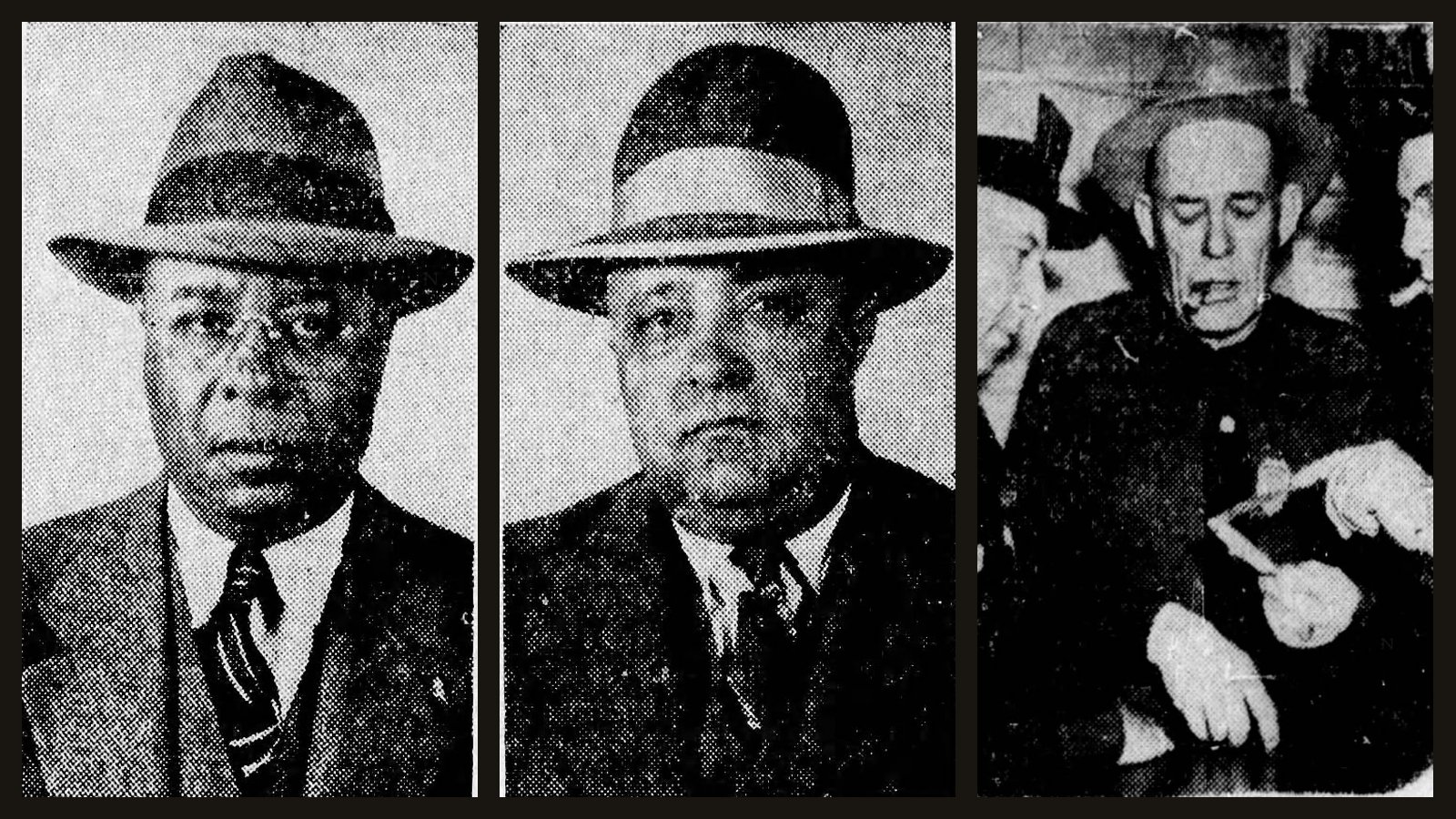
That Saturday was also the day the Black Dispatch came out, Roscoe Dunjee's weekly in Oklahoma City. It named and pictured the two detectives who had found Johnson, and said they had done it "while the white officers were clueless."
The twenty-sixth of April
Twenty-three days after the murders, Judge Kenneth Jarrett held a summary hearing on the sentence. The courtroom at Chandler was packed, and onlookers overflowed into the jury box of a trial that never happened. Walter Gorski was there with two of his daughters.
The first witness was his ten-year-old. She said she had gone out to gather the eggs and found her mother and baby sister "lying on the ground as if asleep." Lewis Drew picked out the truck and the man. Ernest Jones said he had begun "an investigation in his section of the city." Walter Hill took the stand himself about the knife: Johnson had told him the blood on it might be from his cut finger "or from Eloise Chandler cutting meat." Wilson read the confession aloud.
The accounts put the number of state witnesses anywhere from thirteen to about twenty. Defence counsel cross-examined, and offered no evidence at all. Asked if he had anything to say, Johnson said:
At 3.15 that afternoon Jarrett sentenced him to death on both charges, to be carried out on July 6.
Three miles from McAlester
That afternoon Sheriff Orr and other officers drove Johnson to the penitentiary. Orr said he talked the whole way, and took back parts of his confession. Not whether he did it. How.
He said he had sold the feed to Mrs. Gorski, that she gave him a $5 bill and he gave her $2 in change, and that when she would not sell the cows he took a large wrench out of the truck. He said he had meant to tie Roy Schat up and take the truck to make some money with it, "so he and Eloise Chandler could go to Vernon, Easter, and get married." Every change made it worse for him. No court ever heard them.
Eleven months
In June Governor Robert S. Kerr moved the execution to October, because the law gave a condemned man six months to appeal. The appeal said Johnson had been denied counsel and "forced to enter a plea of guilty by threats."
It was argued on Wednesday, December 13, 1944. According to the opinion, counsel told the court he knew of nothing the trial judge should have done that was not done, and no claim was pressed that Johnson had been denied counsel or had confessed under threats. The same day, in a different case from a different county, the court heard another appointed lawyer say there had been threats of violence in the courtroom when his client, a Black man, pleaded guilty. "One man had a rope, the attorney told the court," the Daily Oklahoman reported. There is no such account from Chandler. But it was a claim the court was willing to hear.
On January 10, 1945, the Court of Criminal Appeals affirmed both sentences and set the execution for March 23. The Cleveland County murder charge for Roy Schat had been filed in April and was still pending that July; no trial on it appears in any record found. He left a wife of thirty years, Dewey, and seven children. The youngest was two.
Amon Johnson was executed at McAlester in the first minutes of Friday, March 23, 1945. The current went on at 12.05 a.m., and he was pronounced dead three minutes later. He had refused the chaplain and asked for the latest Black Dispatch. He maintained to the end that he had not had a "fair deal."
He was buried in the prison cemetery, because his mother, Mrs. Mittie Johnson of Boley, "was unable to claim the body for burial." The papers gave his age as 29 and then 30. His draft card gives a birth date in May 1913; his grave marker says 1915. The state never settled it.
What happened between Wednesday, April 12, when Johnson asked for a jury trial and a lawyer, and Saturday, April 15, when he refused a lawyer and pleaded guilty. The transcript of that Saturday exists in the appeal record and has never been printed.
Why the appeal claimed he was denied counsel and threatened into his plea, and then let both claims go at oral argument.
What became of the Cleveland County murder charge for Roy Schat, still pending in July 1944.
What became of Elouise Chandler. She was nineteen, her statement solved the case, she was held as a material witness, and after April 1944 she is in no record found so far.